

PERSON: Dave Williams
Position
Attorney
Biography
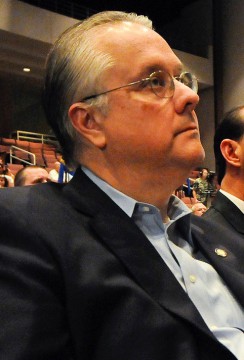
David Lewis Williams (born May 28, 1953) is an American attorney, Republican politician, and judge from the U.S. state of Kentucky. From 1987 to 2012, Williams represented Senate District 16, a position he secured upon the retirement of fellow Republican Doug Moseley. When Republicans gained control of the state senate in 2000, Williams was chosen as President of the Senate, and held that post continuously until his resignation in November 2012. In September 2010, he announced his candidacy for the Republican nomination for governor in the 2011 gubernatorial election. On May 17, 2011, Williams secured the Republican nomination over Tea Party movement-backed Phil Moffet. However, he lost the general election by twenty points to incumbent Democratic Governor Steve Beshear. In November 2012, Williams resigned his Senate seat to accept a circuit court judgeship.
Immediately after finishing law school in 1977, Williams challenged the incumbent county judge in Cumberland County. Although Republicans had a 3-to-1 voter registration advantage in the county, Williams lost the election. His next run for public office came in 1984, when he challenged incumbent legislator Richard Fryman in the Republican primary election to represent Kentucky’s 53rd district (Clinton, Cumberland and Wayne counties) in the Kentucky House of Representatives. In an election where a myriad of local issues resulted in ten incumbents in the House of Representatives losing their respective primaries statewide, Williams garnered 2,450 votes to Fryman’s 1,804; a third candidate, Kirby R. Ringley, got 1,519 votes. With no Democratic challenger, Williams took the seat. At age thirty-one, he was the youngest member of the House of Representatives at the time.
As a member of the House, Williams served on the Education Committee. His most notable actions were in opposition to an education reform package proposed by Governor Martha Layne Collins, a Democrat, during a special legislative session in July 1985. Williams opposed a provision of the plan that required county officials to raise additional tax revenue in order to participate in school construction program; he said that counties which were owed large amounts in delinquent taxes would have to raise tax rates above the state minimum in order to collect the requisite funds. He offered several amendments to the plan, including the repeal of a provision to pilot a career ladder program for educators and a requirement that the state retirement system pay the full health insurance premiums of retired teachers and their spouses.All of Williams’ amendments were defeated, except one to maintain the same qualifications for writing aides that were required of kindergarten aides. After the session, Williams and Representative John Harper charged that Collins delayed approval of public works grant projects in their districts in retaliation for their opposition to the reform plan; Collins denied that.
— Wikipedia
Immediately after finishing law school in 1977, Williams challenged the incumbent county judge in Cumberland County. Although Republicans had a 3-to-1 voter registration advantage in the county, Williams lost the election. His next run for public office came in 1984, when he challenged incumbent legislator Richard Fryman in the Republican primary election to represent Kentucky’s 53rd district (Clinton, Cumberland and Wayne counties) in the Kentucky House of Representatives. In an election where a myriad of local issues resulted in ten incumbents in the House of Representatives losing their respective primaries statewide, Williams garnered 2,450 votes to Fryman’s 1,804; a third candidate, Kirby R. Ringley, got 1,519 votes. With no Democratic challenger, Williams took the seat. At age thirty-one, he was the youngest member of the House of Representatives at the time.
As a member of the House, Williams served on the Education Committee. His most notable actions were in opposition to an education reform package proposed by Governor Martha Layne Collins, a Democrat, during a special legislative session in July 1985. Williams opposed a provision of the plan that required county officials to raise additional tax revenue in order to participate in school construction program; he said that counties which were owed large amounts in delinquent taxes would have to raise tax rates above the state minimum in order to collect the requisite funds. He offered several amendments to the plan, including the repeal of a provision to pilot a career ladder program for educators and a requirement that the state retirement system pay the full health insurance premiums of retired teachers and their spouses.All of Williams’ amendments were defeated, except one to maintain the same qualifications for writing aides that were required of kindergarten aides. After the session, Williams and Representative John Harper charged that Collins delayed approval of public works grant projects in their districts in retaliation for their opposition to the reform plan; Collins denied that.
— Wikipedia
ClipsBank
Full
Compact
NewsBase
Full
Compact
RadioBank
Full
Compact
PodBank
Full
Compact
TranscriptBank
Full
Compact
No data found


